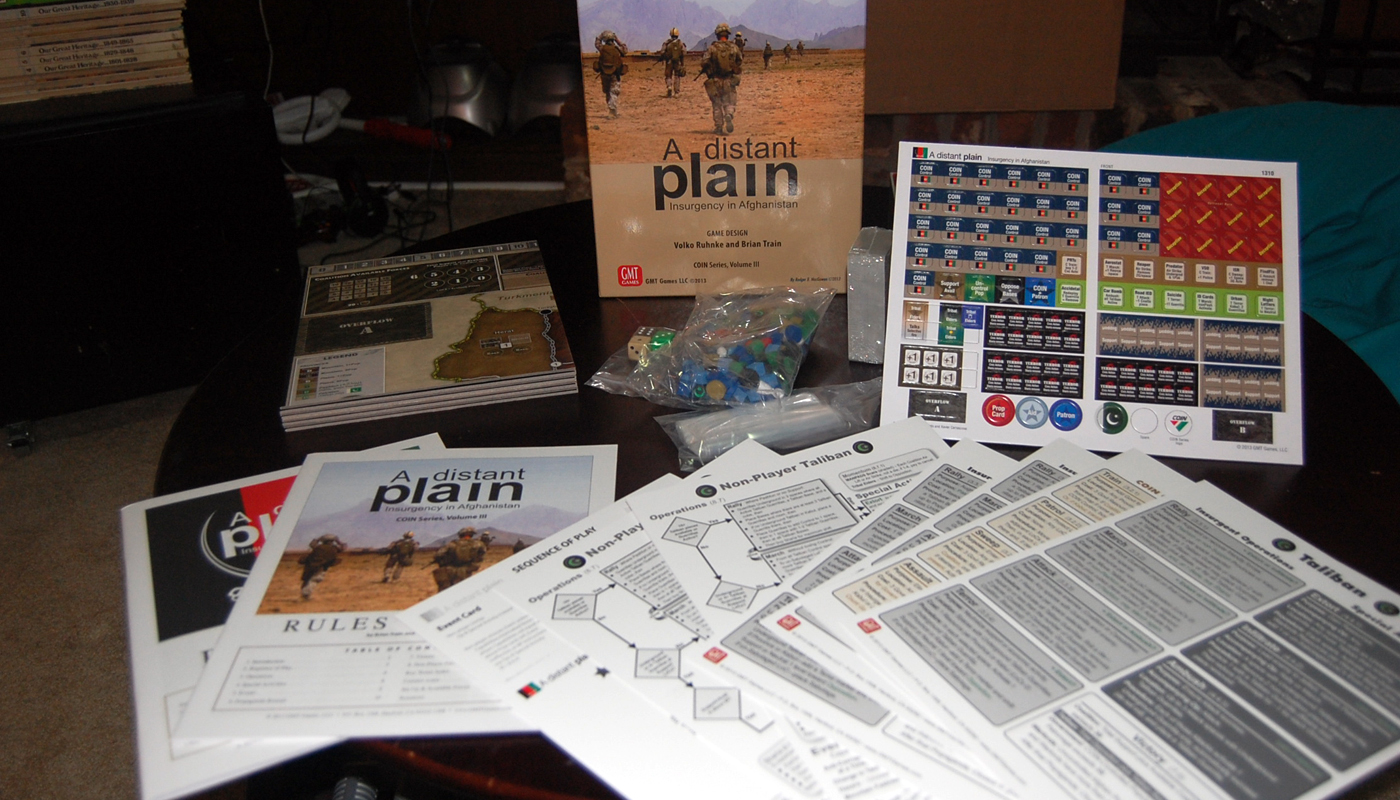
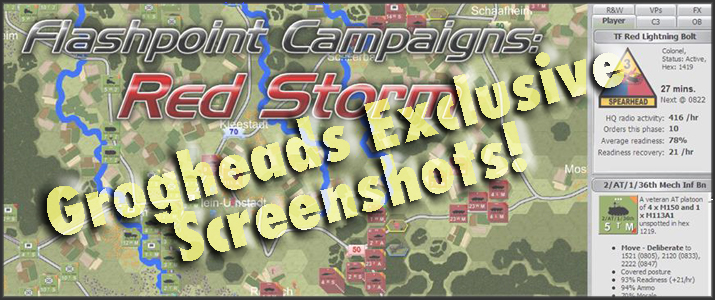
GMT’s newest entrant into the COIN Series from Volko Ruhnke bring collaborator Brian Train into the fold. A Distant Plain explores counterinsurgency operations in Afghanistan, and we’ve been following the developments for quite a while. And while I didn’t force the designers to collaborate at gunpoint or anything, I did book them both into the same panel at Connections in 2011, so somewhere along the way I’m going to claim 1.87% of the credit of getting these two excellent designers together.
Brant Guillory, 18 October, 2013
This is a pretty hefty box. It’s a standard footprint, but several inches thick.
And there’s a reason for it – this box is loaded: player aids, 2 books, a countersheet, a bag of other markers, and a deck of cards.
Dr Sterrett is the Deputy Director of the US Army Command and General Staff College’s Digital Leader Development Center’s Simulations & Exercises Division. Yes, that’s a loooooooong title. The short version is: he uses wargames for training, and gets paid for it. He’s also an avid hobby wargamer, and has spent about 7 years struggling to come to grips with the differences between “games” and “simulations” (pretty much since I introduced him to “Brant’s Theory of the Differences Between Games and Simulations”). In spite of this, he agreed to have a chat with us about his role at Ft Leavenworth.
Interview by Brant Guillory, 5 October 2013
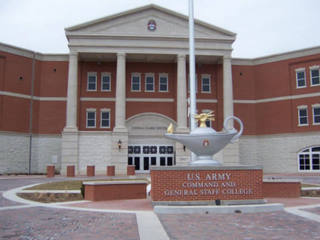
The crest of the Command & General Staff College at Ft Leavenworth, KS
Can you please give us an overview of the Digital Leader Development Center’s Simulations & Exercises Division, and what role they fill at the Command and General Staff College (CGSC)?
The Digital Leader Development Center (DLDC) supports CGSC’s exercises. DLDC has three major functions: providing and supporting Army and Joint mission command systems; providing and supporting simulations and exercise planning; and providing an exercise network for the simulations and the command systems.
Thus, Simulations & Exercises Division’s foremost job is exactly what it says on the label: put on the exercises the instructors want: selecting the best simulation for the job, ensuring it is ready to deploy into classrooms, preparing support materials, building scenarios, training student and faculty operators, and providing technical support. In addition, we teach the electives on training with simulations, exercise design, and exercise management; and we conduct R&D to find new simulations to meet the faculty’s needs. Sometimes we build them; we’ve got a very simple board game in testing at the moment, intended to help with classes in planning.
Exterior of the Lewis & Clark Building, that houses the bulk of CGSC
What sort of wargaming backgrounds do your team bring to the table, and how does that help them with their day-to-day jobs?
We’re all gamers. The Euler diagram of the overlap of our gaming hobby interests is pretty complex, and there are very few places where all of us overlap – but there are two keys ones. First, each of us brings some passion for the use of simulations in training and education. Second, all of us enjoy putting on games for other people: things such as building scenarios, designing and testing systems, or creating support materials – exactly the kinds of work we need done.
What’s a “week in the life” of preparing for a big wargaming event (say, a warfighter exercise) look like on the DLDC team? What about a “day in the life” of the actual exercise?
We don’t run anything as big as a warfighter; our biggest exercises are the division exercises. One of these is run for every section of 64 students, and they are run in two big batches: typically 5 or 6 in September, and 16-18 in February. The students use their own classrooms for the exercise. We teach 1 or 2 students from each section to be the technical lead for their section’s exercise. Those students then teach their fellow students how to operate the simulation – in this case, Decisive Action – and are the leads of the Tech Cell during the exercise, while we in Simulations are the on-call tech support.
One of the two Tech Cell students is usually an FA57 officer; Functional Area 57 is Simulation Operations, and one of their primary jobs in the Army is running exercises. Being the Tech Lead is a good experience for them and an opportunity to demonstrate to their peers what it is FA57s do. We usually call the non-FA57s “Temporary FA57s” for the exercise and thus refer to the whole group as FA57s, even though some of them are actually in other branches. Continue reading →
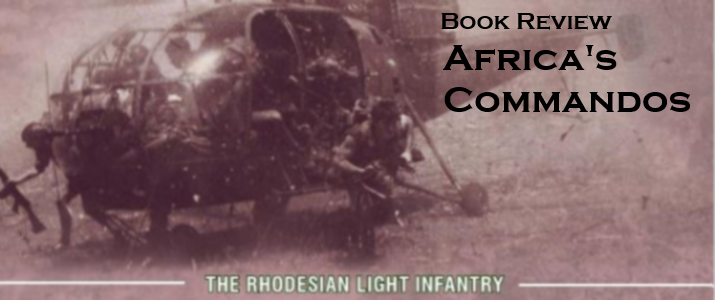
A new collection of memoirs and first-hand accounts of the actions throughout the distinguished history of the Rhodesian Light Infantry makes for a compelling read and memorable look into the first-hand accounts of Africa’s bush wars of the 60s and 70s.
We took off en masse, ten G-Cars carrying the 2Cdo troops; ten K-Cars; two
command helicopters and ten G-Cars carrying the Support Commando troops detailed
to man the forward admin base and ferry in fuel and supplies to the target
area.
The flight provided us with some impressive and memorable visuals.
All 32 helicopters were flying in single file through the majestic Penhalonga
Mountains, some of the most magnificent terrain in the world. The troops gazed
in awe at the spectacle as they leaned out of the Alouettes and looked around.
Two or three Canberras thundered low over us en route to their targets.
For a few minutes there was the amazing sight of the command helicopters and the
ten K-Cars peeling off in front of us to position over their allocated targets;
the six paradaks dropping the 3Cdo and the SAS paratroopers; and the Hunters
diving in on their targets. The air was thick with dust and smoke and the
streaks of SNEB rocket trails.
And the tales of Op Dingo – the Rhodesian raid on an ZANLA camp inside Mozambique – put the reader front and center in the battle. These are not analyses of secondary sources with discussions of geo-political implications. These are the memories of the men on the ground, at the sharp end of the spear, pulling triggers and “culling floppies.” This isn’t the news conference soundbite; this is the scene in Blackhawk Down when the choppers are taking off and the trucks are rolling out and Stevie Ray Vaughn’s cover of Voodoo Chile is providing the soundtrack.
As you read the book and pore over the memoirs, however, you realize that although the raid on Chimoio was an abberation in its size and distance from the RLI’s bases inside Rhodesia, the action wasn’t. These men were a battle-hardened brotherhood who had chased “terrs” (slang for “terrorists”, the ZANLA and ZIPRA guerilla forces) across their entire country, protecting the population from invaders whose semi-safe bases outside of Rhodesia’s borders gave them a geographic and demographic edge. The RLI didn’t care. They found a way to succeed in every battle they faced, and along the way became perhaps the most successful counter-guerilla force in history. Continue reading →
“A riveting and sober account of war in all its horror and glory.”
Authors: SSG David Bellavia with John R. Bruning
Publisher: Pocket Star (Kindle eBook Edition Reviewed)
Reviewing Author: Jim Zabek
Many of the memoirs written by contemporary veterans have a predictable structure. This is especially true of the writings of elite troops such as Navy SEALs. They often open with a discussion of how difficult their training was. I believe many these accounts spend so much time focused on training not only because it is difficult and dramatic, but also because many of the operations the authors undertook aren’t declassified. It’s difficult to write a memoir about operations that aren’t supposed to have taken place.
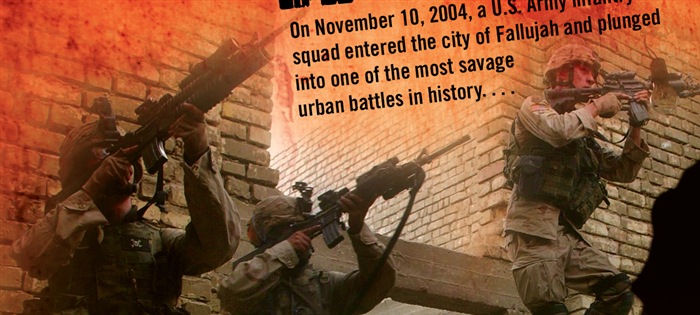
SSG Bellavia’s book is different. He was a regular infantryman in the US Army. He allots most of his time not in avoiding his combat experiences, but rather in bringing them to the reader’s attention. In the Author’s Note he clarifies that some events have been slightly altered, either due to timing so that events can be better understood in context, or reconstructed as best he could when he wasn’t there to directly witness the action himself. The result is a riveting and sober account of war in all its horror and glory. Continue reading →