09/28/13

The GrogHeads Interview: Jim Snyder & Rob Crandall of Flashpoint Campaigns: Red Storm

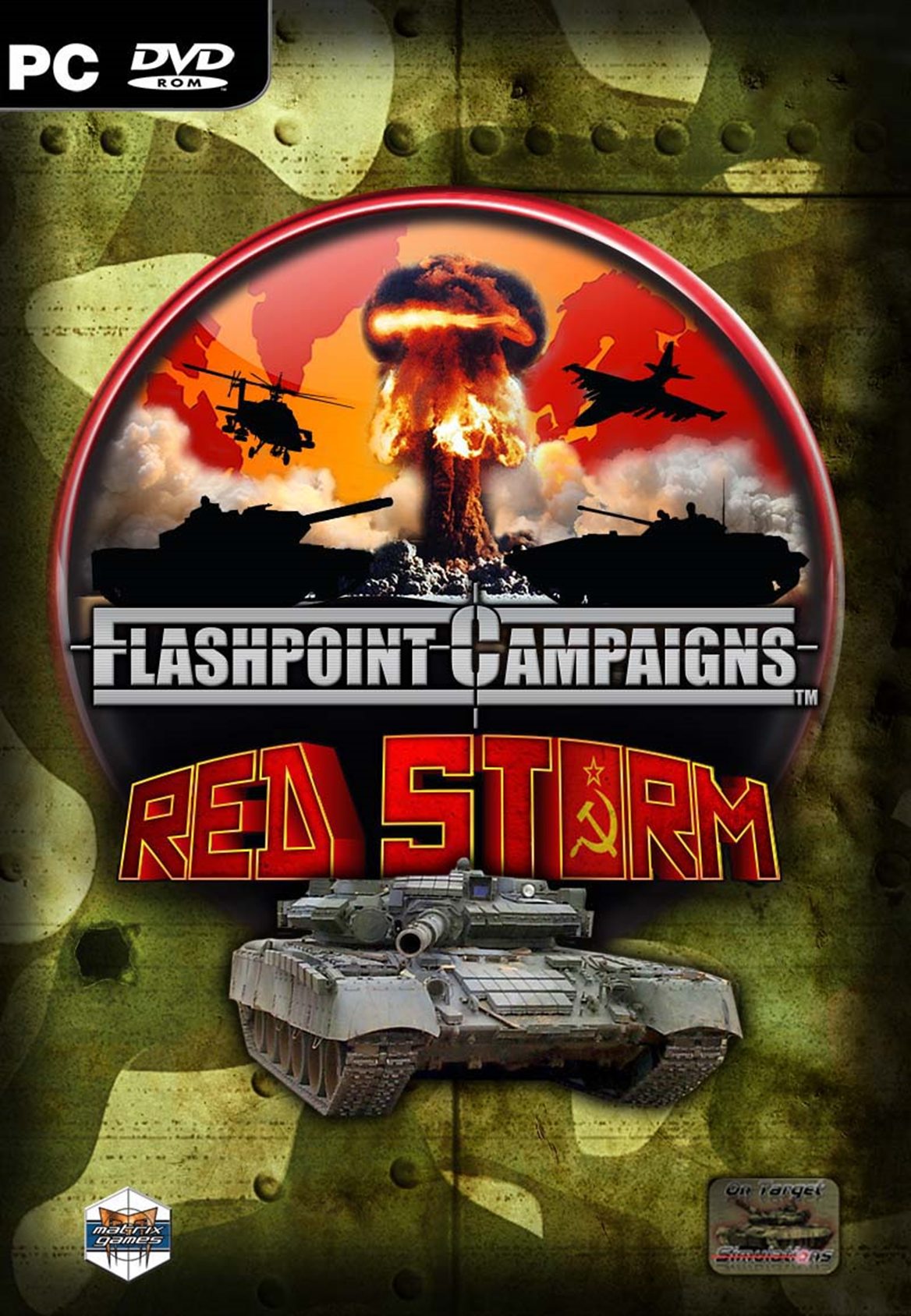
fpcrs-boxGrogheads interviews the twin geniuses (geniui?) behind the new Flashpoint Campaigns: Red Storm.
 

GH: Since the release of Flashpoint Germany it’s been eight years. For wargamers who have been dying to get their hands on the sequel, what took so long?

Rob Crandall: There is researching the game, designing the game, coding the game, testing the game and then documenting the game. Then you decide the original concept wasn’t that great after all and you repeat the process. Keep repeating until you run out of patience and/or money. Such is the carefree life of a game developer! The costs are all upfront and the payoffs are speculative and far away so it is a real test of commitment to see it through to the very end. Worse, although many parts of the work are fun, many are no fun at all and this can really bite. It is easy to zip through the fun parts but it takes discipline to do the rest when you know it will take months and months to do so. Mercifully, I had some outstanding help and the parts that were not so fun for me were picked up by partners who could do them.

I don’t have any direct evidence but I have often thought that for every ten wargames that get talked about only one gets started. For every ten that get started maybe only one gets finished. It is just that hard.

FPRS has almost 200 design documents supporting it, I have 3,500 emails sitting in Outlook regarding it since April 2007 and there are 10,500 forum posts in the Matrix private development forums. At least 100 testers must have helped me out over the years by now. Managing all that takes time too!


GH: Flashpoint Germany used tiles for movement. Flashpoint Campaigns: Red Storm uses hexes. Why the change?

Rob Crandall: I completely rewrote the square tile system so that each tile was broken down into a 4 x 4 grid of cells. Each cell had its own graphic and was rated for all the different terrain factors. The 16 averaged together represented the tile as a whole. It was awesome and very inventive, if I say so myself, but it was still squares and was too different from everything else. Converting the underlying code to hexes took something like a weekend and I have never regretted it. The result was I had to throw away my internal map editor and go to the existing system where we paint a map in a paint program and then scan it for values based on color IDs. That is a little more cumbersome but I loved the look and also loved that it became a chore I could delegate to people with greater graphic talents than I.

Jim Snyder: The graphics fell to me and I’m not really that good compared to a real graphics artist, but what I did does work. Plus folks will be able to mod their own stuff too.
Continue reading

09/27/13

GARPA 28 – GrogHeads Advanced Research on Projects Advisory

GARPA #28, Grogheads Staff

Fall is the best time of year…this is not even debatable, primarily because the heat of summer has been broken and the weather is cooler. But there is so much more that fall has to offer! Like fear. Fear brought to you by darkening days, the harvest possibly coming up short and the impending onset of winter…even if we don’t farm, there’s a natural connection to autumn that brings both excitement and a niggling sense of unease. All of this culminates in Halloween, The World’s Best Holiday.

You probably think we are going to bring you a series of planned board and PC games that intend to scare the crap out players. But would we be the GARPA guys if we were so obvious? Maybe. But that’s not what we’re doing in this installment…plenty of time for scares in the next few weeks. For now, enjoy the seasonally appropriate impending doom evident in the following planned projects!

Board Games

BattleAxeBattleAxe by Nick Ryan

$3,135 pledged of $110,000 goal, funding ends Wednesday, October 23

HTML: http://www.kickstarter.com/projects/nickryan/battleaxe?ref=category

If you are 35 or older, you may remember an awesome game from the early 1980s called Crossbows & Catapults in which players literally hurled miniature projectiles at each other’s medieval strongholds in hopes of capturing their enemy’s keep. It was a violent but awesomely fun, basic game. BattleAxe appears to be in a similar vein, but hopes to be more advanced.

BattleAxe is set during the Dark Ages (I don’t care what people are calling it these days, they will always be the Dark Ages to me) and, like Crossbows & Catapults, players will assemble and command armies, build a keep, and attempt to kill the enemy king. Think chess but in three dimensions, using armored spearmen, axemen, swordsmen, and cavalry in your army and towers, walls, trenches, and fire for defense. An oversized battlefield map and custom dice are also included. The game takes a realistic angle and makes a point in not including fantasy elements of any kind…this is a game of Dark Age combat and tactics.

Nick Ryan, the developer of BattleAxe, assures potential players that the game itself is already 95% done and has been in play testing for two years, with “only funding” required at this point. That’s a big missing link, but if the game plays well tactically and strategically as promised, it will be worth investing in. Let’s hope BattleAxe can capture some of the magic that Crossbows & Catapults had for us older guys.

GARPA 28 - ReluctantPre-Order: Reluctant Enemies (MMP)

766 of 640 orders needed, Pre-order price of $39.00

Reluctant Enemies is designed as a ‘gateway’ game into the OCS series, but it also covers the rarely-gamed Middle Eastern ‘front’ in WWII, as the British sought to shore up their territories on the eastern edge of the Med.  The reluctant enemies in this fight are the Brits – with their Australian, Indian, and Free French allies – opposing the Vichy French seeking to make mischief in Lebanon and Iraq.  Once the Vichy French allowed German aircraft to overfly their airspace en route to an anti-British coup in Iraq, well… it was on!

The OCS series is known for its monster Case Blue-like games, but Reluctant Enemies is a one-map “son of OCS” specifically designed for players new to monster gaming’s premier system.

Get your pre-orders in before the price jumps.

Continue reading

09/25/13

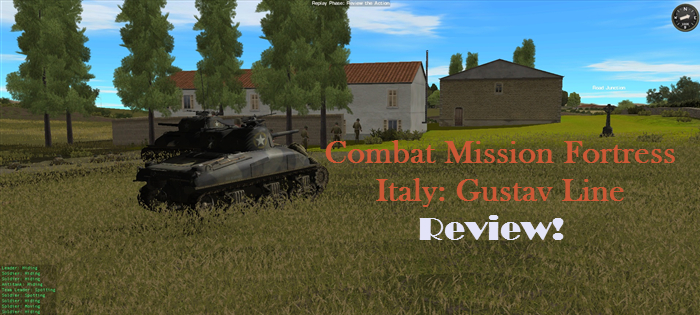
Combat Mission Fortress Italy: Gustav Line – PC Game Review

Developed and Published by Battlefront Inc.

Author: Boggit

Last year I reviewed the core game and first instalment of CMFI . That review was positive in most respects, and particularly for the innovations to the CMx2 engine. I was however, mainly critical for the omission of any Commonwealth troops for a Sicilian campaign, and for the scarcity of “historical” scenarios with regard to the history of US forces in action. So what does Fortress Italy Gustav Line add to the core game?

Well the short answer is that Fortress Italy Gustav Line is a huge improvement to the core game. It adds a considerable amount of new nationalities, combat formations, equipment, campaigns, scenarios and quick battle maps. It also adds some new features previously unseen in the CMx2 engine.

US Scouts under fire from Flakvierling
Take cover!! US Scouts come under fire from a Flak Vierling.

At last the Commonwealth forces make their entry, starting with Operation Husky in Sicily. Battlefront has added many new combat organisations, vehicles etc. to the existing mix giving much more variety. In addition to the US army the Allies now comprise the Poles, Canadians, British, and New Zealanders. For the Axis there we see the fearsome Fallschirmjägers, which now debut on the Plain of Catania in Sicily, and later can make their famous stand in the devastated town and abbey of Monte Cassino. Similar to the other Combat Mission games in the CMx2 series, combat formations are well researched to reflect the historical unit organisation in the Italian theatre of operations. A nice touch for picky Grogs like me! To put this all into perspective Fortress Italy Gustav Line specifically adds:

  • 7 new US formations including the Glider Infantry Battalion and the Cavalry Reconnaissance Squadron
  • 25 new German formations including the Luftwaffe’s Parachute Pioneer Battalion (which is great for assaulting built up areas), to the Heer’s Grenadier Battalion, which has three variations to itself- the 1942, the 43, and 44 type.
  • 18 Commonwealth formations (although the availability of particular Commonwealth Formation types vary by national army, as well as any organisational and equipment differences between the Commonwealth forces). These include formations like the Air Landing Battalion (Great for fighting the early days of Operation Husky around the city of Syracuse), and the Armoured Recce Regiment.

Continue reading

09/23/13

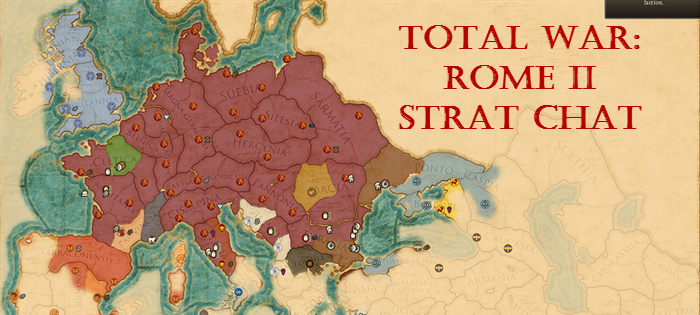
Strat Chat: Rome II

By Jim Zabek

Playing Total War: Rome II can be a challenge. Although there is an in-game encyclopedia it’s fairly limited when you get into the game. It can tell you What things do, but you have to figure out the Why and the When on your own. If ever a game could use a Strategy Guide, this would be it.

I’m now about fifty hours into the game. It’s 79 BC and this is my first campaign. I’m playing the Suebi, northern European Germanic tribesmen, and I’ve managed to conquer most of continental Europe playing on the easiest game mode. Almost universally (at least on our forums) gamers have concluded that even the easiest game setting for Rome II can be challenging. With fifty hours of gameplay into the game, I’m discovering that it finally is relatively easy to play now. I’ve got a surplus of 50,000 gold in my coffers, am making 13,000 gold each turn, have a surplus of about 50 food, and have several large armies trampling about the continent taking provinces by storm at will.

2013-09-23_00011
My empire thus far.

So how did I do it? With only one game under my belt – and that only half completed by my estimate – I cannot claim to be a Rome II guru. However, with some reasonable success I think I can sketch out some basic strategies that may help folks struggling with the campaign. Because there are so many factions and each has their own building I am making a large assumption here: I am assuming that no matter which side you play, infrastructure plays a similar role. I could be wrong on this. If I am, I would urge folks to discuss it in our forums where we all as a community can learn from each other and improve our gameplay. Again, I’m not claiming to be an expert, just a guy with some time to share some thoughts on what I’ve learned so far. With that, let’s begin.

It’s Not All Total War

For a game entitled “Total War” I have found that Creative Assembly has been particularly good about creating games that go well beyond war. The strategy portion of their games has always been the most satisfying to me, and part of my enjoyment comes from the fact that these games incorporate economic and social aspects of empire building along with the military. Rome II is no exception.

2013-09-23_00002
Commerce, culture, and agriculture. These buildings are typical of most of my provinces.

Continue reading

09/19/13

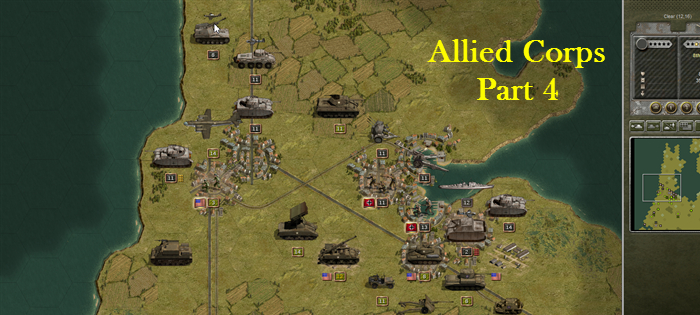
Allied Corps – AAR Part Four

So now we arrive at the fourth and final part of our Allied Corps AAR. Readers may recall that Part 3 left off as I made a mad dash to capture victory objectives in the Netherlands. I had successfully captured objectives due west around Leiden, decided not to try and crack the nut to the south in Rotterdam. But that meant I had to walk into the teeth of the German defenses around Amsterdam and this was going to be a tough fight. By ignoring Rotterdam I was committed to capturing all of the objectives around Amsterdam. Go big or go home. So we open with Lucky Turn 13:


Allied Turn 13

Allied Corps AAR-Sept-2013-119During Turn 12 I managed to box in an armored train to the west of my main force. Unable to move off the rails it had nowhere to go. Because it was at a junction boxing it in required three units. Two infantry units I could afford to spare, but the tank would be useful in Amsterdam. I didn’t need it yet, but the clock was ticking and I was hoping I wasn’t going to need that tank before I destroyed the train. Being armored it’s as tough as some tanks. To be safe I also had two aircraft loitering for extra fire power. That’s a lot of assets for one unit, but it was in my rear and I had no idea what kind of nasty surprise it might deliver if I left it to its own devices.

I first move the British Engineers behind it to block it from retreating any further. They don’t attack because they and the train are about the same strength and it won’t turn out well for the Brits. I move the Chaffee up from Utrecht and take it under fire. I inflict two points of damage and the train is now low on ammo. Excellent. US Engineers attack it and its strength drops from five to two – then, with nowhere to retreat, it surrenders! Perfect.

Down by Den Haag my Firefly needs to be resupplied so I do so and it rests a turn. The Cromwell fires in the V2 for fun and does three points. The loitering Wellington drops bombs and takes out the remaining point on the V2. I’m afraid I’m going to have to leave these tanks in Den Haag in order to prevent the Germans in Rotterdam from retaking it. The force I have up north will have to do.

I have some 7.2 inch artillery shell a 37mm Flak gun protecting the airfield to the east of Amsterdam. Three points of damage!

Continue reading