10/11/13

GARPA 29 – GrogHeads Advanced Research on Projects Advisory

By Lloyd Sabin, Brant Guillory, Dan Pinkham, and Jim Zabek
October 11, 2013

The days are really starting to get shorter now. For gamers, that means fewer issues with sunlight reflecting off their monitors and maybe getting the kids to bed a little earlier to get some gaming going. As usual we have some great ideas to make that heavy wallet you’re lugging around a little less cumbersome.

Card Games

Oracle – Mystifying Playing Cards by Chris Ovdiyenko
$9,970 pledged of $20,000 goal, funding ends Friday, November 8

OracleIs there anything more appropriate to this time of year than a card deck based on Ouija boards, spirit photography and spiritualism? Probably, but I can’t think of what it is right now.

Spiritualism was a movement developed between the 1860s and the 1920s that centered on contacting the dead. Initially practiced by American Civil War widows, it gave people hope during the darkest times of their lives and eventually became popular enough and was taken seriously enough for the wealthy and powerful to practice, including a series of American Presidents and politicians. And luckily for printer Chris Ovdiyenko, spiritualism is loaded with instantly recognizable images, as you can see from these screen shots.

For this card deck, the suits will be the big differentiator. Each suit will be unique, with its own theme, whether it is a séance, automatic writing, or ectoplasm. The designs are created by Chris, who etches them onto wood plates with a laser and then applied to “museum quality artist paper.”

It’s a simple but quite interesting project, which is more appropriately shown with images than words. If you’re into the subtly creepy like me (after all, I work here), I think you will appreciate this Oracle card deck. The art is intricate, a bit disturbing and tells many good stories. And while playing cards, a good story can be even more valuable than a good hand. Oracle’s Kickstarter page can be found here.

Oracle1

Miniatures

Reaper Miniatures Bones II: The Return Of Mr Bones!
$1,613,460 pledged of $30,000 goal, funding ends Saturday, October 26

GARPA-29-ReaperOnce or twice each year it seems like a game (or game-related concept) appears on Kickstarter and the internet goes supernova. Last year Reaper Miniatures had that happen to them. They served up a project, asked for a modest $30,000 or $40,000 (I forget exactly) and ended up with gamers literally throwing money at them. When it was all said and done they had well over a million bucks raised and their biggest problem was trying to figure out which building was large enough to hold their inventory until they got it distributed.

Well, lighting has struck twice.

Asking for a modest $30,000, gamers have responded with $1.6 million in pledges and the folks at Reaper are probably starting to consider wallpapering their offices in twenty dollar bills. Kickstarter-ish projects don’t always have a fairytale ending, but if past success is any indication of future results both Reaper and its gamer fan base have some crazy stuff to look forward to. And they lived happily ever after. Until next year, when Reaper will probably do it again. Reaper’s Kickstarter page can be found over here.

Mars Attacks – The Miniatures Game
$250,477 pledged of $50,000 goal, funding ending Saturday, November 10

GARPA-29-Mars-Attacks-MinisThe day before Halloween in 1938 Orson Wells made his famous broadcast that set half of the US East Coast running for the hills. What better time to celebrate a Martian invasion than over the Halloween holiday time? Mars Attacks appears to be (emphasis on “appears” – we have not investigated the issue in any depth) the legitimate representation in game form of the cult-classic movie of the same name.

And, similar to the Reaper Miniatures project above, it has already hit its funding goals and is merrily knocking off stretch goals as gamers toss money their way.

As with most miniature games the figures and scenery are supplied unpainted, but hey, we’re talking about a Martian invasion here. Let your imaginations run free! Unlocked bonuses seem to run the gamut, from additional earthling soldiers to flying saucers to flaming cattle (steak on the hoof for real!).

The designers behind Mars Attacks, Mantic Games, are not newcomers to miniatures gaming. I’ve not played any of their games, but I have seen them in a store and was intrigued. Mars Attacks might be the game to put them on the map and cause gamers to take a second look at all their offerings. In any case, with funding levels already achieved it looks like Mars is indeed going to invade the Earth, and if that sounds like a good time head on over to their Kickstarter page for a closer look.

Continue reading

10/5/13

Interview with Dr James Sterrett, US Army Command and General Staff College

Dr Sterrett is the Deputy Director of the US Army Command and General Staff College’s Digital Leader Development Center’s Simulations & Exercises Division.  Yes, that’s a loooooooong title.  The short version is: he uses wargames for training, and gets paid for it.  He’s also an avid hobby wargamer, and has spent about 7 years struggling to come to grips with the differences between “games” and “simulations” (pretty much since I introduced him to “Brant’s Theory of the Differences Between Games and Simulations”).  In spite of this, he agreed to have a chat with us about his role at Ft Leavenworth.

Interview by Brant Guillory, 5 October 2013

The crest of the Command & General Staff College at Ft Leavenworth, KS

Can you please give us an overview of the Digital Leader Development Center’s Simulations & Exercises Division, and what role they fill at the Command and General Staff College (CGSC)?

The Digital Leader Development Center (DLDC) supports CGSC’s exercises.  DLDC has three major functions: providing and supporting Army and Joint mission command systems; providing and supporting simulations and exercise planning; and providing an exercise network for the simulations and the command systems.

Thus, Simulations & Exercises Division’s foremost job is exactly what it says on the label: put on the exercises the instructors want: selecting the best simulation for the job, ensuring it is ready to deploy into classrooms, preparing support materials, building scenarios, training student and faculty operators, and providing technical support.  In addition, we teach the electives on training with simulations, exercise design, and exercise management; and we conduct R&D to find new simulations to meet the faculty’s needs.  Sometimes we build them; we’ve got a very simple board game in testing at the moment, intended to help with classes in planning.

Exterior of the Lewis & Clark Building, that houses the bulk of CGSC

What sort of wargaming backgrounds do your team bring to the table, and how does that help them with their day-to-day jobs?

We’re all gamers.  The Euler diagram of the overlap of our gaming hobby interests is pretty complex, and there are very few places where all of us overlap – but there are two keys ones.  First, each of us brings some passion for the use of simulations in training and education.  Second, all of us enjoy putting on games for other people: things such as building scenarios, designing and testing systems, or creating support materials – exactly the kinds of work we need done.


What’s a “week in the life” of preparing for a big wargaming event (say, a warfighter exercise) look like on the DLDC team? What about a “day in the life” of the actual exercise?

We don’t run anything as big as a warfighter; our biggest exercises are the division exercises.  One of these is run for every section of 64 students, and they are run in two big batches: typically 5 or 6 in September, and 16-18 in February.  The students use their own classrooms for the exercise.  We teach 1 or 2 students from each section to be the technical lead for their section’s exercise.  Those students then teach their fellow students how to operate the simulation – in this case, Decisive Action – and are the leads of the Tech Cell during the exercise, while we in Simulations are the on-call tech support.

One of the two Tech Cell students is usually an FA57 officer; Functional Area 57 is Simulation Operations, and one of their primary jobs in the Army is running exercises.  Being the Tech Lead is a good experience for them and an opportunity to demonstrate to their peers what it is FA57s do.  We usually call the non-FA57s “Temporary FA57s” for the exercise and thus refer to the whole group as FA57s, even though some of them are actually in other branches. Continue reading

09/28/13

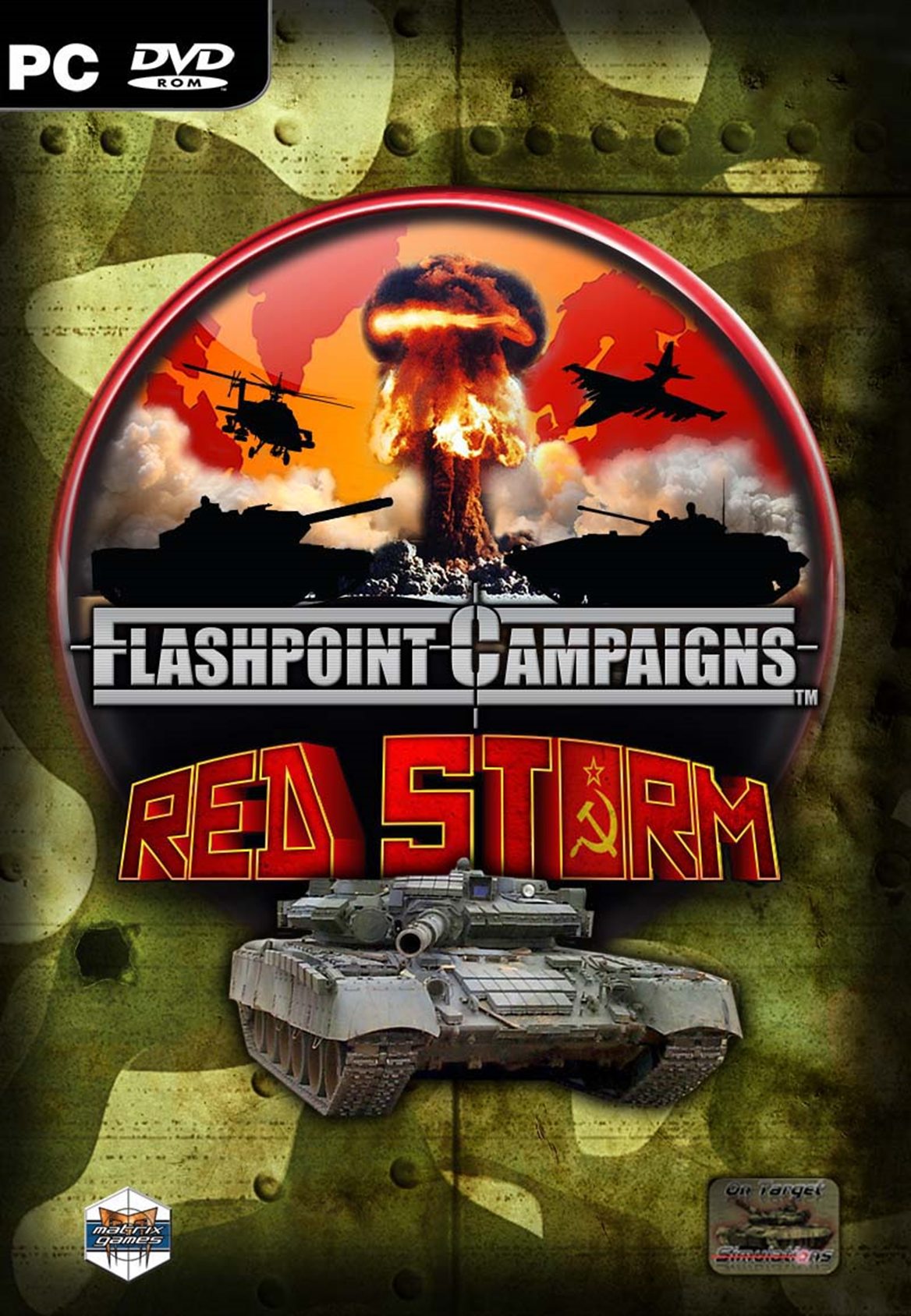
The GrogHeads Interview: Jim Snyder & Rob Crandall of Flashpoint Campaigns: Red Storm

fpcrs-boxGrogheads interviews the twin geniuses (geniui?) behind the new Flashpoint Campaigns: Red Storm.


GH: Since the release of Flashpoint Germany it’s been eight years. For wargamers who have been dying to get their hands on the sequel, what took so long?

Rob Crandall: There is researching the game, designing the game, coding the game, testing the game and then documenting the game. Then you decide the original concept wasn’t that great after all and you repeat the process. Keep repeating until you run out of patience and/or money. Such is the carefree life of a game developer! The costs are all upfront and the payoffs are speculative and far away so it is a real test of commitment to see it through to the very end. Worse, although many parts of the work are fun, many are no fun at all and this can really bite. It is easy to zip through the fun parts but it takes discipline to do the rest when you know it will take months and months to do so. Mercifully, I had some outstanding help and the parts that were not so fun for me were picked up by partners who could do them.

I don’t have any direct evidence but I have often thought that for every ten wargames that get talked about only one gets started. For every ten that get started maybe only one gets finished. It is just that hard.

FPRS has almost 200 design documents supporting it, I have 3,500 emails sitting in Outlook regarding it since April 2007 and there are 10,500 forum posts in the Matrix private development forums. At least 100 testers must have helped me out over the years by now. Managing all that takes time too!


GH: Flashpoint Germany used tiles for movement. Flashpoint Campaigns: Red Storm uses hexes. Why the change?

Rob Crandall: I completely rewrote the square tile system so that each tile was broken down into a 4 x 4 grid of cells. Each cell had its own graphic and was rated for all the different terrain factors. The 16 averaged together represented the tile as a whole. It was awesome and very inventive, if I say so myself, but it was still squares and was too different from everything else. Converting the underlying code to hexes took something like a weekend and I have never regretted it. The result was I had to throw away my internal map editor and go to the existing system where we paint a map in a paint program and then scan it for values based on color IDs. That is a little more cumbersome but I loved the look and also loved that it became a chore I could delegate to people with greater graphic talents than I.

Jim Snyder: The graphics fell to me and I’m not really that good compared to a real graphics artist, but what I did does work. Plus folks will be able to mod their own stuff too.

Continue reading

09/27/13

GARPA 28 – GrogHeads Advanced Research on Projects Advisory

GARPA #28, Grogheads Staff

Fall is the best time of year…this is not even debatable, primarily because the heat of summer has been broken and the weather is cooler. But there is so much more that fall has to offer! Like fear. Fear brought to you by darkening days, the harvest possibly coming up short and the impending onset of winter…even if we don’t farm, there’s a natural connection to autumn that brings both excitement and a niggling sense of unease. All of this culminates in Halloween, The World’s Best Holiday.

You probably think we are going to bring you a series of planned board and PC games that intend to scare the crap out players. But would we be the GARPA guys if we were so obvious? Maybe. But that’s not what we’re doing in this installment…plenty of time for scares in the next few weeks. For now, enjoy the seasonally appropriate impending doom evident in the following planned projects!

Board Games

BattleAxeBattleAxe by Nick Ryan

$3,135 pledged of $110,000 goal, funding ends Wednesday, October 23

HTML: http://www.kickstarter.com/projects/nickryan/battleaxe?ref=category

If you are 35 or older, you may remember an awesome game from the early 1980s called Crossbows & Catapults in which players literally hurled miniature projectiles at each other’s medieval strongholds in hopes of capturing their enemy’s keep. It was a violent but awesomely fun, basic game. BattleAxe appears to be in a similar vein, but hopes to be more advanced.

BattleAxe is set during the Dark Ages (I don’t care what people are calling it these days, they will always be the Dark Ages to me) and, like Crossbows & Catapults, players will assemble and command armies, build a keep, and attempt to kill the enemy king. Think chess but in three dimensions, using armored spearmen, axemen, swordsmen, and cavalry in your army and towers, walls, trenches, and fire for defense. An oversized battlefield map and custom dice are also included. The game takes a realistic angle and makes a point in not including fantasy elements of any kind…this is a game of Dark Age combat and tactics.

Nick Ryan, the developer of BattleAxe, assures potential players that the game itself is already 95% done and has been in play testing for two years, with “only funding” required at this point. That’s a big missing link, but if the game plays well tactically and strategically as promised, it will be worth investing in. Let’s hope BattleAxe can capture some of the magic that Crossbows & Catapults had for us older guys.

GARPA 28 - ReluctantPre-Order: Reluctant Enemies (MMP)

766 of 640 orders needed, Pre-order price of $39.00

Reluctant Enemies is designed as a ‘gateway’ game into the OCS series, but it also covers the rarely-gamed Middle Eastern ‘front’ in WWII, as the British sought to shore up their territories on the eastern edge of the Med.  The reluctant enemies in this fight are the Brits – with their Australian, Indian, and Free French allies – opposing the Vichy French seeking to make mischief in Lebanon and Iraq.  Once the Vichy French allowed German aircraft to overfly their airspace en route to an anti-British coup in Iraq, well… it was on!

The OCS series is known for its monster Case Blue-like games, but Reluctant Enemies is a one-map “son of OCS” specifically designed for players new to monster gaming’s premier system.

Get your pre-orders in before the price jumps.

Continue reading