08/7/13

Go To Games: 7 Wonders

Brant Guillory, 7 August 2013

For a lot of people, their “go-to” game is the game they boot up on the computer when they have time to kill in the evenings, or over a weekend when they’ve got the game on TV and want to safely ignore commercials.  And while I have a few casual “go-to” games in the digital world, I would be remiss if I failed to extoll the virtues of my tabletop “go-to” game for multi-player gatherings: 7 Wonders.


For most wargamers, 7 Wonders barely registered on their radar.  A fast-playing European production, 7 Wonders has an abstract combat mechanic, and one that can be safely ignored and still result in a resounding victory.  With so little battlefield relevance, it’s not wonder that many grogs steered clear of 7 Wonders when it was released.  Their loss.  Seriously.

7WONDERS_3D

The core schtick of 7 Wonders is a play-a-card city-building mechanic where players use resources to build parts of their cities, including attempting to build one of the Wonders of the Ancient World.  The original game came with players’ boards for the widely-acknowledged 7 Wonders of the Ancient World, but subsequent expansions (including a brand-new pack of boards) give players almost 20 options around which to build their cities, including the Colosseum, The Great Wall, and Stonehenge.
Continue reading

08/6/13

Tuesday Screenshot

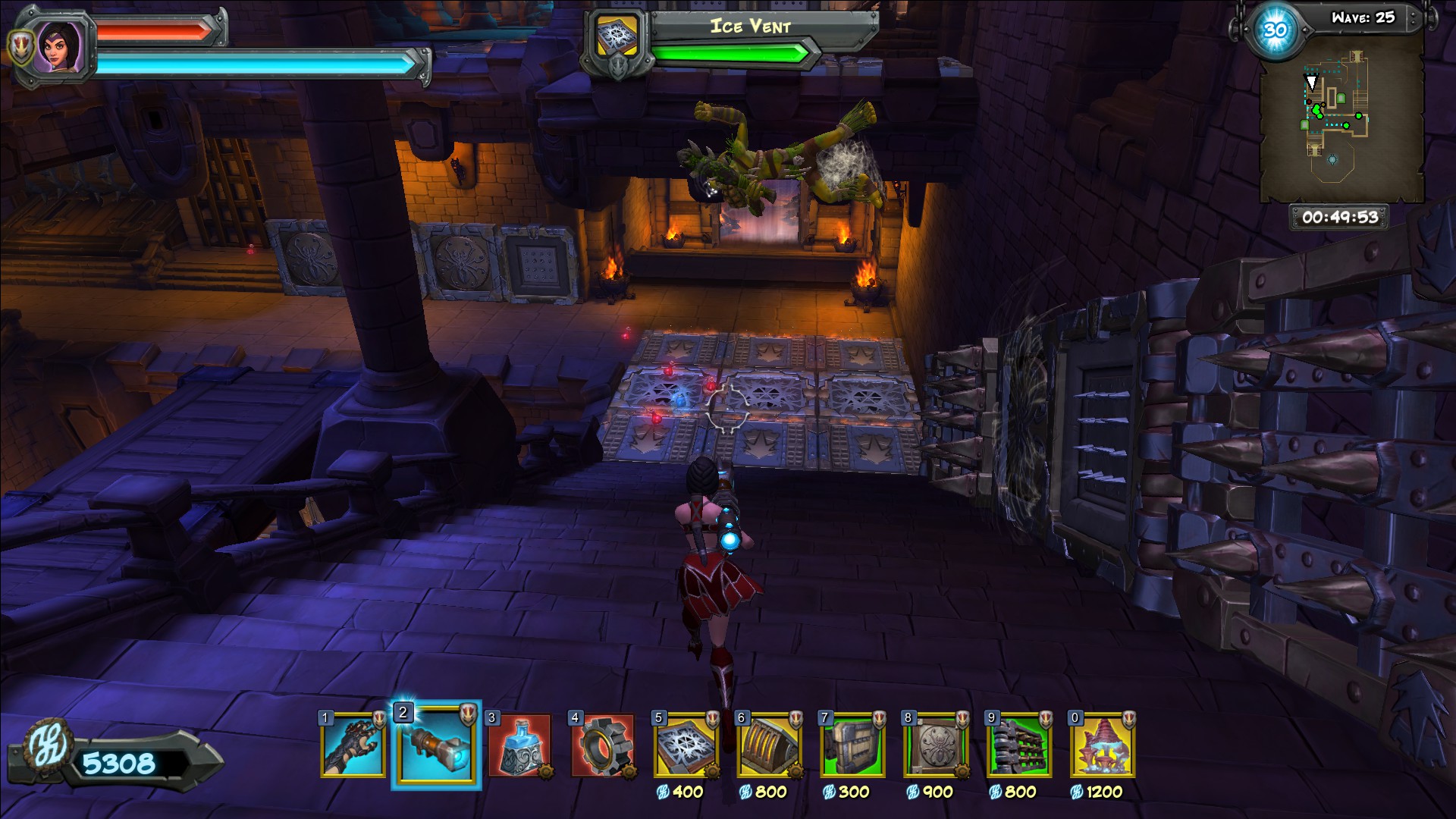
Being a powerful warmage has its privileges. It also has its bad days. A good day sees a Spike Wall trap flinging a Swamp Troll head-over-heels down a flight of steps.

2013-08-06_00070

A bad day? Well, a bad day has half a dozen Fire Ogres beating me like a drum while I frantically try to lay a charm trap to get a couple of them to fight on my side.

2013-08-06_00071

Game: Orcs Must Die! 2

08/5/13

2012 Charles S. Roberts Award Winners

CSRLogo1As announced last week at WBC, here are the winners of the Charlies for games released in 2012.

Best Ancient to Napoleonic Era Board Wargame: The Battle of Fontenoy (by Paul Dangel), Clash of Arms Games

Best Post-Napoleonic to Pre-World War 2 Era Board Wargame: Bloody April (by Terry Simo), GMT Games

Best World War 2 Era Board Wargame: Red Winter (by Mark Mokszycki), GMT Games

Best Post-WW2 Era Board Wargame: Andean Abyss (by Volko Ruhnke), GMT Games

Best Pre-20th Century Era Computer Wargame: Levee en Masse (by John Welch), Victory Point Games

Best 20th Century Era – Modern Computer Wargame: Battle of the Bulge, Shenandoah Studios

Best Science-Fiction or Fantasy Board Wargame: Star Wars: X-Wing Miniatures Game (by Jeffrey Kniffen), Fantasy Flight Games

Best Science-Fiction or Fantasy Computer Wargame: X-Com: Enemy Unknown, Firaxis 2K Games

Best Magazine Game: Beyond Waterloo (by John Prados), Against the Odds magazine (ATO)

Best Desktop Published (DTP) / Print-and-Play / Postcard Game: City of Confusion: The Battle for Hue, Tet 1968 (by Paul Rohrbaugh), High Flying Dice Games

Best Expansion or Supplement for an Existing Game: Festung Budapest (by Bill Cirillo), Multi Man Publications, Inc. (MMP)

Best Board Game Graphics: The Battle of Fontenoy (by Charles Kibler), Clash of Arms Games

Best Computer Game Graphics: Battle of the Bulge, Shenandoah Studios

Best Professional Game Magazine: C3i, RBM Publications

Best Amateur Game Magazine: 1914 Dispatches, Oregon Consim Gamers

Best Historical/Scenario Article: 1914 – A postwar Solution for Austria-Hungary’s Mobilization (Michael Resch C3i nr 26)

Best Game Review or Analysis Article: For the People – Defending the Union (by Dave Dockter and Mark Herman), C3i Magazine

James F. Dunnigan Design Elegance Award: Dean Essig

Clausewitz Award HALL OF FAME: Brian Youse

What are your reactions?  Tell us here >>

08/4/13

Book Review: Grey Tide in the East

Author: Andrew J. Heller

Publisher: Strict Publishing International

Reviewing Author: Avery Abernethy

Grey Tide in the East is a short (164 page) World War One alternative history book.  The movement towards war is unchanged from history up until the day before the German right flank is scheduled to cross the Belgian border in hopes of outflanking the French army and capturing Paris.  Kaiser Wilhelm abruptly changes his mind about the war plans due to the almost certainty that the United Kingdom would enter the war if Germany violated Belgian neutrality.  Instead, the majority of the Imperial German Army is packed into trains and sent to East Russia to fight the invading Russian army.

Even casual readers of the history of World War One understand that the mobilization timetables of the major armies were almost unstoppable once they were put into action.   Those largely unfamiliar with the conflict could read Tuchman’s The Guns of August or Keegan’s The First World War to get an understanding of the importance of pre-war plans and mobilization schedules.  The logistical operation to mobilize and move huge Corps on a fixed rail net was massive.  In Grey Tide in the East the Kaiser orders Moltke to change the entire pre-war strategy at the almost the last possible moment.

Continue reading

08/3/13

Civilization V – Brave New World Expansion

Developer: Firaxis Games

Publisher: 2K Games

Author: Son_of_Montfort

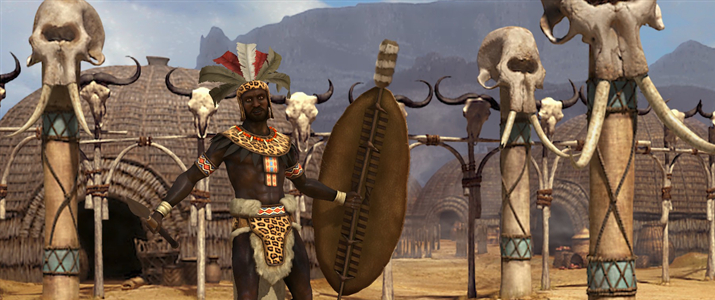
CasimirHistorians, when defining the term “civilization,” emphasize the fact that all civilizations include gatherings of people, have some form of social, political, military, and religious hierarchy, and enjoy cultural developments in art, music, and literature. When playing Sid Meier’s Civilization V, it was quite easy to simulate the urban focus attributed to the great civilizations and the player could easily grab the reigns of social, political, and military authority. It was not until the Gods and Kings expansion that players could form their own religious authorities, conferring the benefits of belief to their citizens and attempting to spread that belief through zealous use of missionaries and prophets.

Still, Civ V gave short shrift to one major aspect of civilization, culture. Yes, players gained social policies through culture growth and could eventually build a theoretical “utopia project” to achieve a cultural victory, but this did not accurately represent how cultures really influenced one another by trade, proximity, aligned ideology, and how some civilizations cultivated a rich and popular society full of music, art, and writing. What I really mean is, until Brave New World, Civ V did not offer the option for players to use The Beatles to conquer the world.
Continue reading